u/sonofabutch

[The Princess Bride] The Man in Black knew ahead of time about the plan to kidnap the Princess Bride because...

...Prince Humperdinck initially tried to hire someone else to do the job.

Vizzini, Inigo, and Fezzik kidnap the princess when they are all alone in the woods, immediately take her to a ship, and set sail at night to the Cliffs of Insanity, which they will scale in order to take her to the Guilder frontier, where they will >!murder her and leave her body there in order to provoke a war between Guilder and Florin.!< It's a prestigious line of work, with a long and glorious tradition.

Inigo then notices they are being pursued by a small ship. It is absolutely, totally, and in all other ways inconceivable that they could be followed, as this would require the pursuer a) know the princess was to be kidnapped, b) have the means at hand to immediately switch from land travel to sea travel and c) since it would be impossible to follow another ship at night by sight, to know their ultimate destination.

As Vizzini explains: "No one in Guilder knows what we've done, and no one in Florin could have gotten here so fast."

The only way someone else could have known all these details ahead of time was if Prince Humperdinck, or more likely Count Rugen or one of his agents, had outlined the plan to other scoundrels, and the Dread Pirate Roberts caught wind of it. Knowing the plan, he knew that Buttercup was to be kidnapped and taken to the Guilder frontier.

Knowing the seas, he knew that the most direct route would be from Florin to Guilder via the Sea of Eels, and then up the Cliffs of Insanity. Although it seems to Inigo that the ship is following them, it's more that Man in Black is going to the same place, because once the kidnap plot was put into motion, he knew where he had to be in order to thwart it.

reddit.com
u/sonofabutch — 18 hours ago

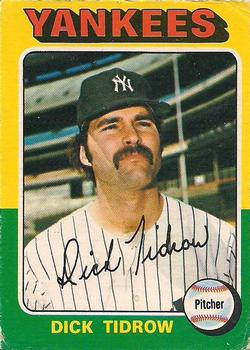
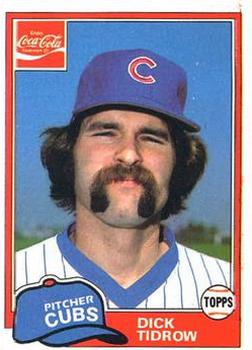
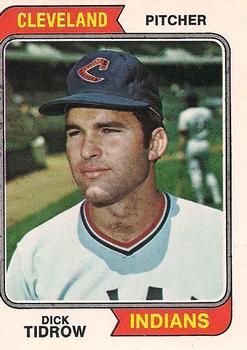
No game today, so let's remember a forgotten Yankee: Dick Tidrow

> "Winning." -- Dick Tidrow, when asked what he would miss most after being traded away by the Yankees

Happy birthday to Dick Tidrow, an important but often overlooked member of the 1970s Yankees dynasty!

Yankees GM Gabe Paul, nicknamed "The Smiling Cobra" for the amiable way he killed you in trades, had been the Cleveland GM before getting hired by George Steinbrenner. Before leaving Cleveland, he dealt Graig Nettles to the Yankees... a deal some believed he made already knowing he was heading to New York. Then he went to New York and a year later traded with Cleveland for Chris Chambliss and Dick Tidrow.

Munson, who was from Canton, was reportedly annoyed he wasn't in either deal. But Paul knew not only who to get, but who to keep. Munson wasn't going anywhere under his watch. He also disobeyed a direct order from George Steinbrenner to leave minor league lefty Ron Guidry unprotected in the 1976 expansion draft. A year later, he ignored Billy Martin's demand to include Guidry in the deal Paul made to bring in Bucky Dent from the White Sox.

(Paul also got Lou Piniella from the Royals, Willie Randolph from the Pirates, and Ed Figueroa and Mickey Rivers from the Angels, and signed as free agents Catfish Hunter, Reggie Jackson, Goose Gossage, and Don Gullett. Of the major league roster Paul inherited when he joined the Yankees in '73, the only ones who remained for the '77-'78 teams were Munson, Nettles, Roy White, Fred Stanley, and Sparky Lyle.)

Tidrow wasn't the biggest name in Paul's roster rebuild, but he proved to be an important one. He could pitch anywhere in a game -- a starter, a closer, a long reliever, a setup man -- and do it effectively.

Tidrow also was one of the leaders of the famously fractured "Bronx Zoo" clubhouse, one of the few who could cross over between the various cliques that had formed... and wasn't afraid to criticize players who weren't hustling. After games, Tidrow, Lou Piniella, Mickey Rivers, Sparky Lyle, and other veterans would sit at the back of the team bus and loudly launch into "rip sessions," tearing into players whom they deemed hadn't given their all. But they did it in a way that would build team unity, rather than destroy it.

"Chris Chambliss once made an error that cost us a ball game in Texas and he told me later, 'The one thing I dreaded most was getting on the bus,'" Lyle said. "But by the time we got back to the hotel, we were all laughing about whatever happened."

Richard William Tidrow was born May 14, 1947, in San Francisco, California, and went to Mount Eden High School in nearby Hayward, where he played football and basketball as well as baseball. Other notable Mount Eden Monarchs are rapper Spice 1, actor Mahershala Ali, and Broadway's James Monroe Iglehart.

As a sophomore, Tidrow was called up as a spot starter for a varsity game and threw a five-hitter, striking out 11. It foreshadowed the kind of "in case of emergency" usage Tidrow would have throughout his days as a Yankee. As a senior, he threw two no-hitters, one on his 18th birthday for his high school and another that summer in American Legion ball. He once struck out 19 batters in a seven-inning high school game, and 22 batters in an American Legion game.

Tidrow was drafted in high school by the Washington Senators (the version that would become the Texas Rangers), but didn't sign, going to Chabot Junior College instead. He pitched well enough there to be drafted by the San Francisco Giants and then by the Cincinnati Reds, but again didn't sign. He finally agreed to a deal after being selected by the Cleveland Indians in 1967.

After five years in the minors, which included a stint in the U.S. Marine Corps Reserve, Tidrow made the major league roster in 1972, a month before his 25th birthday. He took the loss in his debut, giving up four runs on five hits in an inning against the Red Sox. Danny Cater, a former Yankee, knocked in the first run against him, a single to score Reggie Smith from second base.

Tidrow went 14-15 that season with a 2.77 ERA (117 ERA+) in 237 1/3 innings, throwing three shutouts. The following year he was 14-16 with a 4.42 ERA (89 ERA+) in 274 2/3 innings. But then he started the 1974 season an ugly 1-3 with a 7.11 ERA in four starts.

Meanwhile, Yankee fans had reason for optimism after starting the season 11-8, leaving them a half game behind the defending A.L. East champion Baltimore Orioles. Coming off a season in which the Yankees had stumbled with a 6-10 start and then finished 17 games out, this April felt promising.

So the Yankee veterans were perplexed when, following a 4-3 win over the Texas Rangers, it was announced on April 26, 1974, that four major league pitchers -- Fritz Peterson, Steve Kline, Fred Beene, and Tom Buskey -- had been traded to the Cleveland Indians for first baseman Chris Chambliss and pitchers Dick Tidrow and Cecil Upshaw.

Thurman Munson: “You’ve got to be kidding.”

Bobby Murcer: “I can't believe this trade. It just means they don't think we have a winning ball club.”

Mel Stottlemyre: “You just don’t trade four pitchers. You just don’t.”

The New York Times wasn't impressed with the deal either. After all, the Yankees had Mike Hegan and Bill Sudakis platooning at first base. What did they need with Chambliss, "who can hit, although not with home‐run power," the Times opined. In three and a half seasons with Cleveland, Chambliss had hit .282 but with just 26 home runs in 404 games. As for Upshaw, the newspaper noted this was the third time he had been traded since the previous April. (And in fact, the Yankees would trade him at the end of the season.)

That just left Tidrow, and "it remains to be seen whether he will be more than a 500 pitcher."

So why make the deal? Beene, a minor league veteran who joined the Yankees in 1972 at age 29, later revealed Paul's motives weren't just related to on-the-field performance. In Paul's eyes, this was addition by subtraction.

> “They traded four good ol’ boys from the club and broke up the party.” -- Fred Beene

Steinbrenner also had long wanted to get rid of Peterson, who a year earlier had embarrassed the Yankees by announcing that he and pitcher Mike Kekich had "traded wives." (Kekich had been traded the previous season, also to the Indians. As for the wives, Marilyn Peterson stayed with Mike Kekich only for a few months; Susanne Kekich and Fritz Peterson got married and stayed together until his death in 2023.)

In his Yankee debut on April 27, 1974, against the Texas Rangers -- in a home game at Shea Stadium, as Yankee Stadium was closed for the renovation -- Tidrow was summoned in the third inning of a game the Yankees were losing, 5-0. He entered the game with one on and one out and promptly induced an inning-ending double play. He would pitch the rest of the game, allowing one unearned run, in the 6-1 loss.

Tidrow was a Swiss Army knife that season, with 25 starts and eight relief appearances. He went 11-9 with a 3.87 ERA and 1.353 WHIP in 190 2/3 innings.

The following year the 29-year-old Catfish Hunter, one of the best pitchers in baseball, had unexpectedly become a free agent when it was determined A's owner Charlie Finley had violated the terms of his contract. (This was a year before free agency became the norm in baseball.) Every team but the San Francisco Giants offered him a contract; he accepted a five-year, $3.35 million deal with the Yankees.

With Hunter in the rotation, Tidrow was moved to the bullpen, and went 6-3 with five saves, a 3.12 ERA, and 1.385 WHIP in 69 1/3 innings.

The following year, the Yankees at last moved back to Yankee Stadium. The first game in the reopened Stadium was on April 15, against the Twins. Starter Rudy May gave up four runs (two earned) on two hits and three walks in 2 1/3 innings, and was pulled for Tidrow, who again had a great relief effort -- five scoreless innings -- before turning it over to closer Sparky Lyle, who got the final five outs for the save. Tidrow got the win. At the end of his career, he said one of his highlights was getting the first win at the reopened Yankee Stadium. Overall that season, he was 4-5 with 10 saves, a 2.63 ERA, and 1.126 WHIP in 45 relief appearances and two starts. In the post-season, he gave up six runs (five earned) on 11 hits and five walks in 9 2/3 innings.

In 1977, Tidrow was again used in a variety of roles, with seven starts and 42 relief appearances. He went 11-4 with five saves, a 3.16 ERA, and 1.219 WHIP in 151 innings. He gave up three runs in seven innings in the ALCS and two runs in 3 2/3 innings in the World Series as the Yankees won a ring for the first time since 1962.

Back in the rotation for the 1978 season, he went 7-11 with a 3.84 ERA and 1.317 WHIP in 25 starts and six relief appearances. In the post-season, he gave up four runs on 12 hits and two walks in 10 1/3 innings as the Yankees won back-to-back championships.

In 1979, the Yankees had been the favorites after three straight pennants and back-to-back championships, but had stumbled to a 23-19 start, 4 1/2 games out. The Yankees had to make a move, and Tidrow -- who had allowed 20 runs in 22 2/3 innings -- was an obvious candidate.

They traded the 32-year-old Tidrow to the Chicago Cubs for 28-year-old reliever Ray Burris, who was struggling almost as much as Tidrow, with a 6.23 ERA, 1.754 WHIP in 21 2/3 innings. Yankees manager Billy Martin frequently lamented the trade, especially as Burris continued to struggle in pinstripes, posting a 6.18 ERA in 27 2/3 innings. (He was released and claimed by the Mets, who turned him back into a starter, and he had a 3.94 ERA and 1.365 WHIP in the next season and a half.)

With the Cubs, Tidrow was the setup man for Bruce Sutter, and went 11-5 with a 2.72 ERA and 1.247 WHIP in 102 2/3 innings. Sutter won the Cy Young Award that year, and he credited Tidrow with helping him win it.

In three and a half seasons with the Cubs, he went 28-23 with 25 saves in 397 innings (3.36 ERA, 1.300 WHIP). But after the 1982 season, the Cubs and White Sox had a rare cross-town trade, a six-player deal that included future Yankee Steve Trout.

With the White Sox, Tidrow had a 4.22 ERA and 1.309 WHIP in 91 2/3 innings, and allowed one run in three innings in the ALCS. They released him at the end of the 1983 season, and he signed with the Mets. Tidrow's return to New York wasn't a successful one as he gave up 19 runs in 15 2/3 innings, and he was released. He retired at age 37.

After baseball, Tidrow was a scout with the Yankees from 1985 to 1993. Steinbrenner then offered Tidrow a job as a minor league pitching coach, but he turned them down to take a job with the Giants. "George was mad," Tidrow recalled with a laugh. But that job with the Giants lasted until Tidrow's death in 2021 at age 74. He was a key adviser to GM Brian Sabean when the team won three World Series between 2010 and 2014.

Getting Dirty

  • Tidrow's nickname was "Mr. Dirt," then just "Dirt," from the way he could get his uniform dirty even before the game started.

  • Given his first name and his nickname, it was inevitable that they were combined. A headline in The Sporting News on June 16, 1979 proclaimed: "Dirty Dick Takes Quick Steps To Clean Up Cubs' Bullpen".

  • Tidrow was famous for his mustache, which got bigger and bushier over his career. You can see the progression in his baseball cards: 1974 he's clean shaven, 1975 he has the beginning of a biker 'stache, and by 1981 it's the full Hulk Hogan Horseshoe. He joked that the mustache gets thicker as the hair on his head gets thinner. "That's what old guys do," he said.

  • According to an informal poll of major league players taken during the 1979 season, Tidrow was voted "Worst Dressed Player." At a time when major leaguers were expected to wear jackets and ties while in public, Tidrow once fashioned a tie out of a cloth napkin.

  • Speaking of jackets, while with the Indians, Tidrow decided his sport coat was his good luck charm. "I wore the same coat all season. Never changed," Tidrow said. "The guys started calling me 'Coat.' They asked me if my coat answered my wakeup calls at the hotel."

  • Tidrow threw a sinking fastball, a slider, and -- appropriate, given his reputation -- a screwball.

  • In the late 1940s, Boston Braves fans said their rotation was "Spahn and Sain and pray for rain." In the early 1970s, Cleveland Indians fans had their own version: "Tidrow and Perry, then things get hairy." In 1973, Gaylord Perry made 41 starts and Tidrow made 40. No other pitcher had more than 19.

  • Tidrow had a hairline fracture of a finger on his pitching hand during spring training in 1975 that cost him the first week of the season. Tidrow said he had hurt it "fooling around" while playing catch with a minor leaguer. Yankees manager Bill Virdon said Tidrow and the minor leaguer would be disciplined... but Tidrow refused to name the minor leaguer. Dirty Dick was no snitch! Whatever punishment Tidrow received, it wasn't disclosed.

  • During spring training in 1976, Steinbrenner singled out Tidrow, Catfish Hunter, Thurman Munson, and Sparky Lyle for haircuts. "I want to see skin over the collar on the back of their necks," Big Stein commanded. He told the clubhouse attendant not to issue them uniforms until they saw a barber. "I think it stinks, but I'm going to do it," Lyle said. "It's kinda hard to play without a uniform."

  • Tidrow and Sparky Lyle teamed up to play a prank on Ron Blomberg. As the designated hitter, Blomberg would sneak out of the dugout during the top of the ninth of a Yankees home win so he could hit the post-game spread in the clubhouse while his teammates were on the field. Blomberg loved watermelon and frequently it would all be gone before the other players got there. Tidrow and Lyle snuck into the clubhouse during the game and soaked the watermelon in vodka. Then they went back to the bullpen. When the game was over, everyone went to the clubhouse to discover a sloshed Blomberg stumbling around in confusion. "Sparky and I just sat back," Tidrow said, "and watched him flail away."

  • Tidrow had the longest scoreless relief outing in Yankees history on August 25, 1976. With the score tied 4-4, Figueroa was pulled with one out and one on in the top of the seventh. Tidrow retired the next two batters... and stayed in the game for the next 10 innings. He allowed no runs on four hits and no walks while striking out 10 in 10 2/3 innings. Tidrow allowed a single to Steve Brye to lead off the top of the 18th, and Martin pulled him for reliever Grant Jackson, who was perfect for that inning and the next one. In the bottom of the 19th, Oscar Gamble walked, was bunted to second by Willie Randolph, and then after a Lou Piniella fly out, scored on a single up the middle by Mickey Rivers.

  • Coming out of junior college, Tidrow said he thought the most interesting part of baseball wasn't when he was on the mound, but at the plate. Alas, he only had one year before the Designated Hitter rule took effect in the American League in 1973, and then when he was in the National League he was usually a reliever and so rarely batted. He was 9-for-95 (.095) with seven RBIs, three walks, and 42 strikeouts, and 0-for-1 in his only postseason batting appearance. He wasn't much better in the minors, hitting .103 with no extra base hits in 189 plate appearances.

  • Tidrow was Guidry's roommate when Louisiana Lightning was a rookie, and was credited with giving Guidry the nickname "Gator". "Ronnie was pretty crude when he first started rooming with me and I tried to impart whatever knowledge I had for him and it seemed to work," Tidrow said. Guidry said Tidrow taught him how to pitch.

  • Even though he was working for the Giants at the time, Tidrow returned to Yankee Stadium in 2003 when Guidry got his #49 retired.

  • Tidrow also gave future Yankee Rick Reuschel the nickname "Big Daddy" when they were both with the Cubs... not because of his size or his children. Reuschel, at a hulking 6'3", was timed during spring training as the second-fastest player on the team. Reuschel's size and speed reminded Tidrow of All-Pro defensive lineman Big Daddy Lipscomb.

  • Many other pitchers over the years have credited Tidrow with helping them reach the next level. Mike Krukow, who pitched 14 years in the majors from 1976 to 1989, cited the then-retired Tidrow as a big influence on him. A young reporter asked who Tidrow was. "Tidrow," Krukow replied solemnly, "is God."

  • When moved to the bullpen prior to the 1975 season, Yankees manager Bill Virdon said Tidrow was a "right handed relief specialist." Tidrow, who to that point in his career had 103 starts against just 15 relief appearances, was asked by a reporter about his new title. Tidrow thought about it for a moment and then replied: "Well, I'm right handed."

  • Later in his career, a reporter asked Tidrow if he'd rather have a winning record or a good ERA. He quipped: "Really, I'd rather be left handed."

  • While Tidrow threw right handed, he chewed tobacco on the left side of his mouth. In 1979, according to an Associated Press story, Tidrow and the majority of righties chewed on the left, but for lefties it's a coin flip as to whether they chew on the left or the right. Among the past, present, or future Yankees cited in the article, Tidrow and Catfish Hunter were right-handed left-side chewers; Guidry was a left-handed right-side chewer; Sparky Lyle was a left-handed left-side chewer; and Brian Doyle was a rare right-handed right-side chewer. Bobby Murcer said he chewed in the middle. Butch Wynegar, a switch-hitter, alternated!

  • Tasked with finding a manager for the A ball Salem-Keizer Volcanoes in 2000, Tidrow called on former teammate Fred Stanley, a previously forgotten Yankee. Stanley said he had been "suit and tie-ing it" as a front office executive for more than a decade, but agreed to return to the dugout. The Volcanoes went 36-40, but Stanley was named the Northwest League Manager of the Year. The following season, the Volcanoes went 51-25 and were league champions!

  • According to Peter Abraham at the Boston Globe, as of 2021 Tidrow was one of just 36 pitchers to have 100 wins and 50 saves in his career.

  • In 2022, the San Francisco Giants established the Dick Tidrow Scout of the Year Award, "given annually to the Giants scout who exemplifies the integrity, character and work ethic of the late Dick Tidrow."

  • Jerome Holtzman, the sportswriter who invented the save statistic, called Tidrow "one of the best middlemen in recent baseball history." Tidrow was the setup man for two closers who won Cy Young Awards: Sparky Lyle in 1977 and Bruce Sutter in 1979. Each credited Tidrow as a big part of their success. "Some of the younger fans may not know much about Tidrow," Holtzman wrote in 1991, "but trust me: He was among the very best."

> "I never like to come out of a game. I hate to give the other team the satisfaction of knowing they knocked me out." -- Dick Tidrow

Tidrow could go deep into games whether he was a starter or a reliever, then from the back of the bus hold court and ensure his teammates were playing with the grit and hustle he demanded. A Yankee worth remembering!

reddit.com
u/sonofabutch — 23 hours ago
▲ 1.2k r/NYYankees

Mods, thank you for “THEEE YANKEES WIN” after victories. Proposed: Go with an extra E after every consecutive win. Two-game winning streak THEE, three-game THEEE, season-high tying eight THEEEEEEEE!

The longest winning streak in Yankees history is 19, from June 29 to July 17, 1947, and would be THEEEEEEEEEEEEEEEEEEE YANKEES WIN!

reddit.com
u/sonofabutch — 8 days ago

Joe Kirkwood was Australia's first great golfer. He won the Australian Open and the New Zealand Open at age 23, and in 1923 won the Houston Invitational. The following year he won the San Antonio, Houston, New Orleans, and Corpus Christi Opens -- the last by a PGA record 16 strokes.

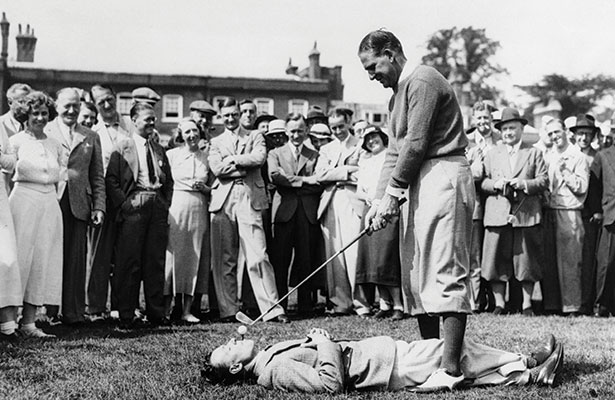
Kirkwood became famous for trick shots, like driving a ball tee'd up in a man's mouth, holding three clubs to hit three balls at once, hitting a ball and then a second one so quickly that they could collide in flight, hitting a ball with so much backspin it went straight up and he would catch it in his hand, and even hitting a ball off the back of an elephant. He could play either left-handed or right-handed, and sometimes played left-handed with right-handed clubs!

In the 1920s, Kirkwood teamed up with the famous Walter Hagen, who is still third in majors won (11, behind Jack Nicklaus with 18 and Tiger Woods with 15), on a world tour to promote golf. During a stop in Mexico, Kirkwood and Hagen played on a golf course in Tijuana with grass so parched they said it was like playing in a desert. They decided for the following day's round of golf they'd instead play in the streets of Tijuana. (It was, of course, a publicity stunt, with reporters trailing them.) They walked a mile away from their hotel, then played their way back to it, chasing their balls through the streets, plazas, and markets. They agreed the last hole would be the toilet bowl in their hotel room, with $50 going to whoever "sank" the final shot first.

Hagen reached the hotel first, lofting a shot from the flower beds and through the front doors into the lobby. Then he chipped his way up the stairs and putted his way down the hallway and into their hotel room.

The ball rolled onto the tile floor of the bathroom, but Hagen couldn't get enough loft on the club to chip the ball into the toilet bowl. After a dozen unsuccessful tries, at last the trick shot master caught up. "Move over," he said. Hagen got out of the way and with one easy swing Kirkwood plopped his ball into the water.

> "Now that's what I call a fifty-dollar splash." -- Joe Kirkwood

u/sonofabutch — 10 days ago

> "That guy thinks he should win every time he pitches, and if he loses, it's a personal conspiracy against him." -- Lou Gehrig on Johnny Allen

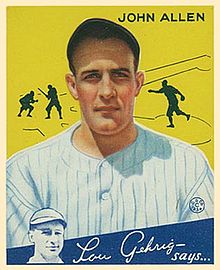
Johnny Allen was one of the most famous hotheads of the 1930s. After four seasons in pinstripes and numerous confrontations with teammates, umpires, and fans, the Yankees finally traded him to the Cleveland Indians.

"You have just acquired the worst disposition in the American League," a New York sportswriter told Ed McAuley of the Cleveland News.

Ninety years ago today, on April 30, 1936, Allen faced his former teammates for the first time. He breezed through the first three innings. Then, in the fourth, the notorious headhunter threw up and in at Lou Gehrig. The enraged Yankees in the dugout started screaming at him, and Allen started screaming back from the mound, completely losing his composure. The Yankees pounded him for four runs on nine hits and three walks in six innings!

John Thomas Allen was born September 30, 1905, in Lenoir, North Carolina. His father, Robert L. Allen, the town's police chief, died of appendicitis when Johnny was a boy. Johnny's widowed mother, Agnes, was unable to provide for the four children, and sent three of them, including Johnny, to the Thomasville Baptist Orphanage.

Like his future teammate Babe Ruth, life in the orphanage taught Johnny how to fight -- "I lost my first one hundred fights there, but none after that," he later recalled -- and how to play baseball.

Three months before his 17th birthday, Allen left the orphanage with two dollars in his pocket, a change of clothes, and a Bible. For the next three years, he traveled around North Carolina and Virginia, working on farms and in hotels.

He grew into a 6-foot, 180-pound specimen -- 1940s N.C. State quarterback Peanut Doak, a friend of Allen's, said he was "one of the strongest men I've ever seen."

Allen also continued playing baseball, even attending church -- which, after all those years in the Baptist Orphanage, he hated -- so he could play in church leagues in addition to semi-pro teams.

Soon his fastball drew the attention of professional teams, and in 1928, he played for three unaffiliated minor league teams in North Carolina -- the Raleigh Capitals, the Fayetteville Highlanders, and the Greenville Tobacconists. The following year he went to the more competitive South Atlantic League, pitching for the Asheville Tourists. There he went 20-11 with a 3.33 ERA in 249 innings, and hit .313 in 115 at-bats.

A scout for the Yankees named Johnny Nee -- who had discovered Bill Dickey in Mississippi a few years earlier -- asked Asheville owner Dan Hill about his best players. Hill didn't mention Allen, but Nee had seen his stats and asked about the two-way phenom. "He's wilder in more ways than his control," Hill said. "And, boy, what a sweet disposition! He must eat sulfur and brimstone for breakfast." But he could pitch, Hill admitted. He also added that the Indians had inquired about him. Nee paid Asheville $7,500 for the rights to Allen and signed him to a minor league contract with the Yankees for $300 a month.

When Allen made his debut with the Yankees two years later, sportswriter Will Wedge invented a colorful story that Allen, while working as a clerk at a hotel, checked in Yankees scout Paul Krichell. Allen doted on Krichell, personally fulfilling his every request, while begging him for a tryout. Krichell finally agreed. The former major league catcher took Allen into an alley next to the hotel, marked off sixty feet six inches, and told Allen to give him his best fastball. Krichell then had one last request for the hotel clerk -- some ice for his swollen glove hand!

> "That was Will Wedge's story, and I let it go as long as Will was alive. But now that he's gone, I've got to admit, it was just another of those baseball yarns. It is true, I worked as a hotel clerk as a young man, but I really was Johnny Nee's boy. It was Nee who bought me from Asheville for the Yankee organization in 1929." -- Allen in Fiery Fast-Baller by Wint Capel

The Yankees assigned Allen to the Jersey City Skeeters in the International League. There his manager was previously forgotten Yankee Bob Shawkey, a pitching guru who had mentored a number of future Yankee hurlers, including future Hall of Famers Red Ruffing and Lefty Gomez as well as previously forgotten Yankees Jumbo Brown and Spud Chandler.

Allen went 12-16 with a 3.98 ERA in 1930, and then the following year was invited to spring training with the Yankees, but was sent back to Jersey City. Soon after he was reassigned to Toronto Maple Leafs, where sportswriters unanimously voted him to the International League All-Star team. After the season, he married Leta Shields, a North Carolina girl he'd met a few years earlier on a train to Myrtle Beach.

Allen was brought back to Yankee camp for spring training in 1932, and newspapers said he was the "best of the lot" when it came to the team's pitching prospects.

Allen's first game, on April 19, 1932, came against the Boston Red Sox. He was smacked around for four runs on three hits and two walks in the first inning, and then in the second, another run after giving up two hits and two walks. He was pulled for previously forgotten Yankee Poison Ivy Andrews.

Allen sat for two weeks and came back on May 3 against the Washington Senators. That day's starting pitcher, Herb Pennock, gave up three runs on four hits and two walks in the first inning and was pulled after getting just one out. Allen came on, walked the first batter he faced, and then retired the next 14 in a row before walking another batter to lead off the fifth. Then six more outs in a row before being pulled in the top of the seventh for a pinch hitter.

Five and two-thirds hitless innings earned Allen another shot in the rotation, and he threw three complete games in a row, two of them shutouts. After that, aside from when he was out with injuries, he'd be a regular in the rotation the rest of his Yankee career. During that rookie season, Allen reeled off 10 straight wins between July 17 and September 5. Over the streak, he had a 2.43 ERA and 1.030 WHIP in 77 2/3 innings. Overall for his rookie season, he was 17-4 with a 3.70 ERA (110 ERA+) and 1.240 WHIP in 192 innings, and he led the league with an .840 winning percentage.

After going to the World Series six times in eight years between 1921 and 1928, the Yankees were well out of it in 1929, 1930, and 1931. In 1932, they finally roared back to the American League pennant, winning 107 games thanks to monster seasons from Babe Ruth (8.5 bWAR), Lou Gehrig (8.2), Red Ruffing (7.8), Earle Combs (5.2), Tony Lazzeri (4.4), and Ben Chapman (4.2). Allen ranked seventh on the team, and second among pitchers, with 3.1 bWAR that year.

That year the Yankees faced the Chicago Cubs in the World Series. The most memorable moment of the Series came in Game 3, when Babe Ruth hit his famous called shot off Chicago's Charlie Root. Allen started the next day, Game 4, and got just two outs, giving up four runs (three earned) on five hits and an error in the first inning. Allen was pulled for Wilcy Moore, who gave up one run in 5 1/3 innings, allowing the Yankees to get back into it, and Herb Pennock finished it off to win the game 13-6 and complete the sweep.

For just two-thirds of an inning of work, Allen's World Series share was $8,000, twice his annual salary; he and his wife used the money to buy a house in St. Petersburg, Florida, and he earned himself a spot in the Yankee rotation.

In four seasons with the Yankees, Allen was an astounding 50-19 (.725 W%), though his 3.79 ERA was a more pedestrian 106 ERA+, and he'd missed about three dozen starts due to injuries. The bottom line was Allen was a little bit better than a league-average pitcher, but when healthy he could eat innings while pitching for one of the league's best lineups. It was a winning formula.

But Allen, for all his talent, was too much trouble. Even aside from his frequent injuries, the litany of issues with Allen was as long as a CVS receipt. He complained that manager Joe McCarthy wasn't pitching him enough. He argued with umpires about balls and strikes. He blew up at teammates when they made errors. He barked back at fans who taunted him. He threatened hold-outs over his salary. He chewed out reporters for not writing about him enough, and then he chewed out reporters for what they wrote. In the clubhouse, Allen -- shades of Paul O'Neill -- smashed lockers and kicked over water coolers. When the Yankees named Ralph Johnny Broaca the #3 starter ahead of him, Allen snapped: “If I’m not a better pitcher than Broaca, I’ll eat his shirt!” He challenged opposing players and even umpires to fist fights after games.

The final straw came near the end of the 1935 season, when Allen started screaming at McCarthy in the clubhouse. The rest of the Yankees watched in stunned silence as the imperious McCarthy stoically bore the brunt of the tirade, then just walked away. Allen may have thought he won that battle, but McCarthy told GM Ed Barrow to get him off the team before the next season.

The Yankees knew they might have a match with the Cleveland Indians. Back in 1929, the Indians had tried to sign Allen when he was pitching in the minors, but the Yankees had beaten them to the punch. The Indians had another connection to Allen -- their current manager, Steve O'Neill, had been his manager for the Toronto Maple Leafs in 1931, and was sure he could handle him.

But the Indians knew Allen's reputation, and their offer was pretty weak: 27-year-old Monte Pearson and 26-year-old Steve Sundra, both right-handed pitchers. Pearson had pitched in four seasons for the Indians, going 36-31 with a 4.21 ERA (107 ERA+), but was coming off a disappointing 8-13, 4.90 ERA (92 ERA+) season. Sundra, (a previously forgotten Yankee, was a minor leaguer who had gone 4-6 with a 6.18 ERA and 1.784 WHIP in 102 innings with Cleveland's top farm team, but 5-1 with a 1.47 ERA in 55 innings while on loan to the Newark Bears.

The Yankees took the deal. On December 11, 1935, at last Johnny Allen became someone else's problem. The Sporting News opined: "On the small evidence available at this writing, close observers are inclined to believe O'Neill will need all his managerial control and expert knowledge of Allen's disposition to keep the pitcher on the ground."

Allen said all the right things about his new team, saying he was looking forward to the reunion with O'Neill and happy to be in Cleveland. After a rough first start (six runs in 4 1/3 innings), he came back with a shutout and an 8 2/3-inning relief appearance to close out a 16-inning game.

Then came April 30, 1936, when Allen faced the Yankees for the first time at Yankee Stadium. Pearson, one of the pitchers he had been traded for, was opposing him.

McCarthy knew the volatile Allen was likely going to try to start trouble, and told his players to keep their cool. All was well until the bottom of the fourth. With the Indians up 1-0, Lou Gehrig came up to the plate to lead off the inning. Allen threw a pitch that came close to the Iron Horse's head, and the Yankee dugout exploded with rage, screaming at their former teammate. Allen, screaming back, quickly lost his composure. He eventually walked the Yankee captain, then gave up a triple to Bill Dickey and a double to Ben Chapman to knock in two runs; later in the inning, Tony Lazzeri scored on a passed ball to make it 3-1 Yankees. Allen was done by the sixth inning, and the Yankees won it, 8-1.

The secret was out: Allen could be rattled. Teams were relentless in heckling him, and in his next seven starts beginning with the game against the Yankees, Allen went 2-5 with a 5.93 ERA and 1.878 WHIP in 41.0 innings.

> "As Allen's temper rose, his control vanished." -- The Sporting News

Rogers Hornsby, now the 40-year-old player/manager of the St. Louis Browns, told his batters that whenever Allen seemed to have settled into a rhythm to step out and ask the umpire to check the ball for foreign substances... but to wait until after the ball had been thrown back to Allen, requiring him to throw it back to the umpire for the inspection. Allen, seething on the mound, grew hotter by the second as the umpire looked over the ball. On one occasion, when the batter asked the umpire to check the ball, Allen threw it at the batter; on another, he threw it at the umpire, who had to block it with his chest protector!

The nadir was a game against the Tigers. Third base coach Del Baker -- who had learned how to heckle as a teammate of Ty Cobb from 1914 to 1916 -- was so relentless in his verbal attacks that Allen went after him, and umpires had to restrain him. After the game, he vowed vengeance not just against Baker but all who dared mock him. "Far from regretting his headlong charge at Baker, Allen after the game was threatening various forms of torture to anyone who abuses him from the coaching box the rest of the season," The Sporting News reported.

The turning point came after a loss on June 3, 1936, to the Red Sox at Fenway. Allen cruised through the first six innings, giving up one run on four hits and two walks, and he had helped his own cause with a two-out, two-run single in the top of the fourth. But he unraveled in the seventh, giving up five runs on six hits and an error. Allen was pulled after the inning, and the Indians lost, 6-2.

In the clubhouse following the game, Allen had some refreshments, chatted with reporters, and then did a little redecorating. Or as The Sporting News put it:

> "After a brief, but effective, session with popular liquid stimulants, he told the sports writers individually and collectively what he thought of them, then appointed himself a one-man wrecking crew for the club's hotel."

Allen went back to the hotel and kicked over an urn used as a cigarette ashtray, spilling sand and cigarette butts all over the floor. He then grabbed a fire extinguisher from the wall and sprayed it everywhere, including on a worker who was standing on a ladder changing a lightbulb. Then he went to the hotel bar, knocking over chairs and throwing bar stools against the wall. The hotel gave Allen a bill for $50 for damages, and O'Neill fined him $250 and told him he would suspend him the next time he lost his temper.

After that Allen was, if not a model citizen, certainly not the bad boy he had been to that point. His new demeanor certainly affected his performance on the mound: Over the rest of the season, he was an impressive 16-5 with a 2.85 ERA and 1.266 WHIP, and he finished the year 20-10 with a 3.44 ERA (149 ERA+). The following year, despite missing six weeks due to appendicitis, Allen was an impressive 15-1 with a 2.55 ERA (176 ERA+) and 1.254 WHIP.

In fact, Allen was poised to set an American League record for most consecutive wins in a season -- 16. On the final day of the season -- October 3, 1937 -- Johnny was 15-0 and slated to start. He also would set a record, set by the Yankees' Tom Zachary in 1929, for most wins without a loss in a season, but all eyes were on the consecutive wins record, set by Walter Johnson and Smoky Joe Wood in 1916, and then tied by Lefty Grove in 1931 and by Schoolboy Rowe in 1934. (The major league record is 19 in a row, set by Rube Marquard in 1912.)

In the bottom of the first inning, Allen had two outs and a runner on second base when Hank Greenberg hit a ground ball at third baseman Odell Hale. The ball went right through his legs and the runner scored from second base. Though scored a hit, Allen was furious at Hale as it would prove to be the game's only run in a 1-0 loss as the opposing pitcher, Jake Wade, threw a one-hit shutout.

After the game, Cleveland manager Steve O'Neill had to twice restrain Allen as he tried to attack Hale!

Even so, Allen's 15-1 record set a record for best winning percentage in a season (.938) with at least 15 decisions until Elroy Face went 18-1 (.947) in 1959, and he was named 1937's Major League Player of the Year by The Sporting News.

The following season, Allen lost the first game of the season, then reeled off another 12 straight wins. He was 12-1 with a 2.98 ERA and 1.252 WHIP over the first half and was selected for his first All-Star Team. He pitched three innings, giving up a run on two hits and hitting a batter. Allen said while pitching in the game, he felt something "snap" in his shoulder. (There also were rumors he had slipped and fallen in the shower.) Whatever it was, Allen was never the same: he was 2-7 with a 6.29 and 1.507 over the rest of the season, and he never topped 200 innings again in his career.

During his remarkable run, from after the hotel incident in 1936 until the All-Star Game in 1938, Allen went 47-12 (.797 W%) with a 3.00 ERA and 1.304 WHIP in 543 innings. He won 15 straight games in 1937 and then 12 straight in 1938.

Injuries and more bad behavior clouded the rest of Allen's career. He went 9-8 with a 3.44 ERA in 17 starts and 15 relief appearances for the Indians in 1940, then was accused of being one of the ringleaders of a "revolt" against manager Ossie Vitt. The players had complained to the front office about manager Ossie Vitt being too mean, and were dubbed the "Cleveland Crybabies" by the press. After the season, Allen was sold to the Browns for $20,000, but he went 2-5 with a 6.58 ERA and the Browns released him at the end of July.

The 36-year-old Allen then caught on with the Dodgers, desperate for reinforcements after losing a number of players to military service. In three seasons against depleted World War II rosters, Allen went 18-7 with a 3.21 ERA (107 ERA+) as a swingman; he also went back to the World Series in 1941, and faced the Yankees! He appeared in three of the five games, all in relief, and pitched 3 2/3 scoreless innings. Despite his good work, the Yankees won it, four games to one.

He ended his career with the Giants, going 5-10 with a 3.74 ERA (96 ERA+), and was released prior to the start of the 1945 season.

After his playing days were over, Allen -- the scourge of umpires for so many years -- became an umpire himself, in the minor leagues. A sportswriter said Allen in an umpire's uniform looked to be "about as much at home as a camel in a camel's-hair coat." The Milwaukee Journal noted the first manager who came out to protest one of Allen's calls might be "met by a left hook to the jaw."

Allen died from a heart attack in 1959 at the age of 54, and was survived by his wife of 28 years, Leta, and his son, John Jr., who became a lawyer. As hot-tempered as he was as a competitor, Allen's friends and neighbors remembered him as a good husband, a loving father, and a generous man... including making donations to the Thomasville Baptist Orphanage, which survives to this day as Baptist Children's Homes of North Carolina.

Dirty Johnny

  • Allen's explosive temper and frequent arguing earned him nicknames like "Jawin' Jawn," "The Carolina Tornado," and "The Tarheel Typhoon." But it was said Allen was even more intimidating when he wasn't yelling, with one sportswriter saying when Allen was quiet, he was "as cold and dangerous as an icepick." Another compared him to a jaguar lying in ambush.

  • According to PineStraw Magazine, an unnamed Yankee third baseman "cost Allen a game by dropping a pop fly." After the game, Allen walked up to him in the clubhouse and punched him in the face. "If anybody else drops an easy fly on me," he vowed to his stunned teammates, "that’s what’s going to happen to you!"

  • In a 1938 game, A's rookie Sam Chapman hit a line drive up the middle that hit Allen's knee and bounced to the shortstop, who picked it up and threw him out. Allen was able to stay in the game, but he was enraged. "He hollered at me, 'You busher! You'll never hit another ball like that!'" Chapman recalled. "And I didn't either. I was on my back the rest of the day. Every time I came up, he'd whiz one past my ear."

  • Hall of Fame slugger Jimmie Foxx hit .231/.314/.481 off Johnny Allen in his career, compared to .325/.426/.609 overall. It was his lowest OPS against any pitcher he faced in at least 100 at-bats. Just like the "hit the mascot" scene in Bull Durham, Allen said his secret to keeping Foxx off balance was to play up his reputation for being unable to control his pitches or his temper. He and catcher Bill Dickey had a sign where Allen would uncork a wild one to intimidate the batter. "You ain't paying me enough," Foxx told his manager after another frustrating at-bat against Allen. "That wild man out there was throwing behind me. You could get killed out there."

  • Allen's bad attitude was no doubt influenced by his harsh upbringing in the orphanage. Boys who ran away, as Allen did at least a half dozen times, were caught and paddled, then locked alone in a room -- solitary confinement. Other punishments included having to wash dishes while being made to wear a girl's dress or being sent to the cow barn and not allowed to return without 500 dead flies. Boys who wet the bed were dunked in a tub full of cold water or threatened with castration. Chores on the 600-acre farm began at 4 a.m., and if you worked hard enough that the calluses on your hands impressed one of the supervisors, you might get a nickel as a bonus. Johnny said he always volunteered to milk the cows just for the chance to drink raw milk to supplement the meager amount of food they were given each day.

  • Life in the orphanage was hard, but this being rural North Carolina, the boys were allowed to hunt. While handling a 12 gauge shotgun, Allen shot himself in the foot, losing two of his middle toes. Years later, his son John Jr. told writer Wint Capel that his father could make "a pincher" with the remaining toes on either side. "Sometimes when I was a baby in bed with him, he would give me a playful nip."

  • Coincidentally, another Yankee pitcher from North Carolina -- Jim "Catfish" Hunter -- also was shot in the foot in a hunting accident. “My brother still doesn’t know what happened, but his shotgun went off accidentally and got me in the foot," Jim recalled about 10 years later. "Then he went and had the nerve to faint on me. I had to slap his face to wake him up.” Hunter lost his pinky toe and the feeling in the next one, but still managed to have a Hall of Fame career.

  • In addition to Hunter and Allen, other Yankees born in North Carolina include Hall of Famers Enos Slaughter and Gaylord Perry, as well as Sterling Hitchcock, Jim Ray Hart, Cameron Maybin, and Tom Zachary -- who went 12-0 in 1929 to set the record (still standing!) for most wins without a loss in a season that Allen nearly broke in 1937.

  • Two years after Allen lost the final game of the season to fall to 15-1, Steve Sundra -- one of the two pitchers the Yankees acquired from the Indians for Allen -- was 11-0 on the final day of the season, and started the second game of that day's doubleheader. He lost, 4-2, to fall to 11-1.

  • Allen threw from a variety of arm angles, including an overhand curveball, a sidearm fastball, and a sharp breaking ball he called "my out-pitch" that was likely a slider. The fastball may have been an early form of a cutter because it was fast but broke sideways like a curveball. "That whipcracker of his -- the sidearm fast ball -- is the meanest delivery in the league for a right-handed hitter," Bill Dickey said. "You simply cannot get hold of it. He'll buzz it over the bat handle before you can see it."

  • Like many hard throwing youngsters, Allen struggled with his control in the minors. One newspaper described him as "wild as a hawk." He eventually learned to harness his stuff, at least to an acceptable level, with 3.4 walks per nine innings over his major league career. But he did lead the league with 10 wild pitches in 1933.

  • Pitching in the minor leagues in 1931, Allen threw a fastball that hit the catcher in his face mask. He'd thrown it so hard that the ball became wedged between the bars of the mask, and it took several minutes for a groundskeeper to pry it loose!

  • Between 1932 and 1933, Allen won his first 16 decisions at Yankee Stadium, setting a major league record for most home wins to start a career. LaMarr Hoyt tied it when he went 16-0 at home to begin his career with the White Sox before finally losing a game at Comiskey on June 9, 1982. In 2015, Jose Fernandez of the Marlins finally broke the record when he went 17-0 in 26 home starts to begin his tragically short career.

  • Allen struggled with injuries and illnesses throughout his career. In 1933, he missed the start of the season due to the flu; in 1934, he had a tooth infection as well as a shoulder injury; in 1935, he had a sore arm; in 1936, a sore back; in 1937, appendicitis -- which must have been particularly troubling as it was what had killed his father! -- and in 1938, another shoulder injury.

  • The tooth infection in 1934 was caused by an impacted wisdom tooth, and Allen pitched a career-low 71 2/3 innings that year. Allen had the tooth pulled and kept it as a souvenir, calling it his "$10,000 tooth" because he believed the disappointing season cost him $10,000 in salary.

  • Dave Burtner, who managed a semi-pro team in Greensboro, was an old friend of Allen's. In 1928, after Allen had turned pro, Burtner sometimes used him as a ringer. "We had a good ball club and we were going to play Pinnacle for the state championship. I picked up Johnny to go along and pitch for me. He faced 27 men that day and 27 went back to the bench, 18 of them on strikeouts. I don't suppose he ever pitched another perfect game, but he did that day."

  • One of Allen's teammates on the Asheville Tourists in 1929 was Earl Mattingly... no relation. This Mattingly, from Maryland, had an eight-year career in the minors and pitched briefly for the Brooklyn Dodgers in 1931.

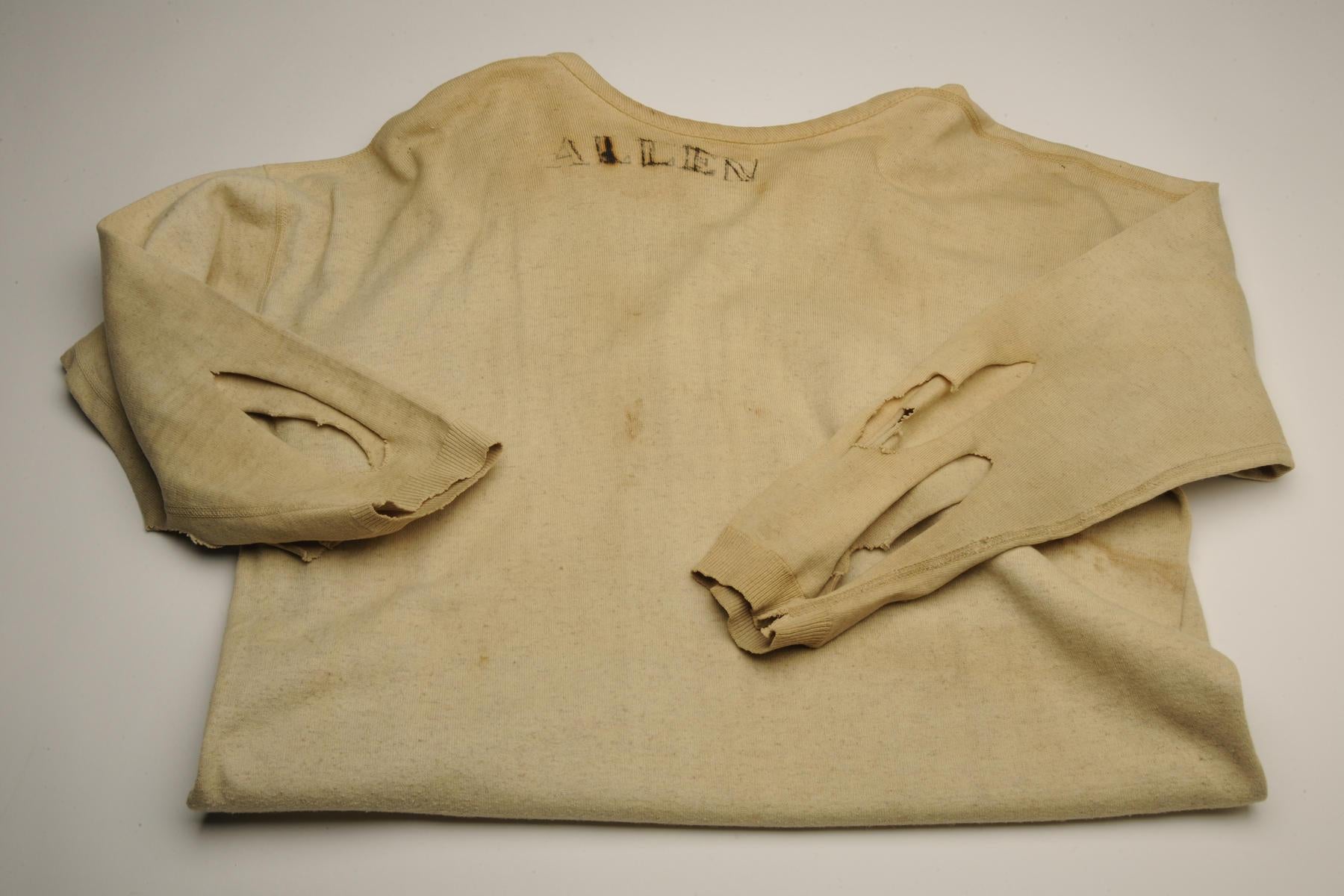
  • On June 7, 1938, Boston player/manager Joe Cronin complained about the tattered sweatshirt Allen was wearing under his jersey, saying the fluttering sleeves were a distraction. (At the time, a rule read: "Pitchers will not be permitted to work with ragged or slit sleeves, which have the effect of confusing the batter.") Allen had indeed cut holes into the sleeves, saying they were for "ventilation." Umpire Bill McGowan told Allen to go to the clubhouse between innings and either change his sweatshirt or cut the sleeves off. When Allen didn't come out for the next inning, Cleveland manager Ossie Vitt went to the clubhouse to see what was going on. Allen said he wouldn't change the shirt, and Vitt fined him $250 and pulled him from the game. A department store in Cleveland then bought the shirt from Allen and displayed it on a mannequin in the front window. The amount paid for the sweatshirt wasn't disclosed, but McGowan, who also fined Allen $250 for a total of $500, said that Allen had sold the shirt for $600, making $100 on the deal. The "holy" sweatshirt was later donated to the Baseball Hall of Fame!

  • On May 27, 1943, Allen was pitching for the Dodgers against the Pirates when he was called for a balk by umpire George Barr. Allen was so incensed by the call that he charged off the mound, grabbed Barr by the shoulders -- or, according to some sources, the necktie -- and shook him so hard his cap fell off. Dodgers second baseman Billy Herman ran over to try to break it up, but Allen just shoved him away. Eventually he was subdued by manager Leo Durocher and teammate Les Webber. Allen was ejected, of course, and then suspended for 30 days and fined $200.

  • Allen wore #18 all four seasons with the Yankees. #18 was worn last year by Oswald Peraza; prior to that, it was by Andrew Benintendi and Rougned Odor. Notable #18's were Didi Gregorius, Hiroki Kuroda, Johnny Damon, Scott Brosius, Randy Velarde, Claudell Washington, Mike Kekich, Hal Reniff, and Don Larsen.

  • In 1977, Allen was posthumously inducted into the North Carolina Sports Hall of Fame.

  • Johnny's wife, Leta, died in 1990 at the age of 86. According to her obituary, the Allens frequently hosted backyard barbecues at their St. Petersburg home that were attended by a number of celebrities, including Babe Ruth, Lou Gehrig, actor George Raft, and heavyweight champion Jimmy Braddock.

  • This is not the Johnny Allen who won NASCAR's Myers Brothers 200 in 1962, or the Johnny Allen who played for the Washington Redskins in the 1950s.

  • For more about this Johnny Allen, check out the book Fiery Fast-Baller: The Life of Johnny Allen by Wint Capel (2001).

> “He expects to win every time he pitches, and if he doesn’t win, he may turn on anybody.” -- Yankee trainer Doc Painter on Johnny Allen's temper

Allen was, in the parlance of the day, a red ass. An ultra-competitive hot-head who blew a gasket when he lost. And isn't that exactly the kind of player we all love to have on our team? The 1930s version of Paul O'Neill. He wanted to win and so do we. For that he should be remembered!

u/sonofabutch — 15 days ago

Ed Wells, a pitcher who spent most of his career with the Detroit Tigers, had a career 4.65 ERA, 1.529 WHIP, and .292/.352/.430 OPS allowed, but inexplicably held Babe Ruth to just 12 hits and no home runs in 58 at-bats, a .207 batting average and .224 slugging percentage. He did walk him 13 times, but also struck him out 16 times. Even Ruth's .352 OBP against Wells was more than a hundred points below his career .474 OBP. Wells just had Ruth's number.

The Babe kept telling the Yankees to trade for Wells, if only so he wouldn't have to face him anymore. It finally happened during the 1928 season. Wells had been traded to a minor league team by the Tigers, and then the Yankees traded for him.

Ruth decided to have a little fun with his old nemesis. During a road trip to Detroit during the 1929 season, Ruth told Wells he knew a girl in town. (No doubt the Babe knew a lot of girls in a lot of towns.) But this girl was shy and would only go out with Ruth if she could bring a friend with her. Ruth asked Wells if he would come along on a double date. They'd pick up the girls at their house and go out on the town.

When they arrived, Ruth told Wells to hang back. The Babe went up to the porch and rang the doorbell. But instead of being the hot date and her friend, it was an angry man.

"So you're the scum who has been seeing my wife!" the man yelled. "I'll kill ya!"

The man pulled out a pistol and fired!

Ruth collapsed on the porch. "I'm hit!" he yelled. "Run for your life, Ed!"

Wells ran, all the way back to the hotel. By the time he got there, several grim-faced Yankees were waiting in the lobby.

"The Babe has been shot," Tony Lazzeri said quietly. "He's in bad shape. He's asking for you."

Wells went to Ruth's hotel room, where he was lying in bed, swaddled in blankets. Ruth mumbled something. Earle Combs pulled back the sheet and Ruth's shirt was covered in blood.

Wells passed out... when he woke up, everyone was laughing. The "blood" was ketchup, the gun had fired a blank, and the angry husband a pal of Ruth's. It had all been a prank.

"Everyone was laughing but Ed," a teammate later recalled.

Wells forgave him eventually, as he and Ruth loved to joke around. Wells took this famous picture of Ruth, a /r/dirtysportshistory classic!

reddit.com
u/sonofabutch — 16 days ago

Today is the NFL Draft, and coincidentally it also is the 21st anniversary of one of the most shocking freefalls in first round history, at least until Shedeur Sanders last year. Aaron Rodgers, the hometown kid who became a star at Cal, is thought to be the #1 pick to the 49ers. Instead, they go with Utah's Alex Smith.

The 49ers had just hired a new head coach, Mike Nolan, who also served as the team's GM. Nolan, son of former 49ers and Saints head coach Dick Nolan, said he liked Rodgers but thought he'd get along better with the more "non-confrontational" Smith. Supposedly Nolan had told Smith at least 10 days before the draft that he was going #1. Of course, no one told Rodgers.

Rodgers said he was later told that Nolan had made up his mind after meeting Smith at lunch:

> "The story that I heard, and I don't know if it's true or not, but that Mike Nolan said that when he saw Alex open the car door for his mom, then he knew that was the quarterback he wanted. And I said, well I was at lunch with him, my mom wasn't there, and my dad wasn't there."

After the 49ers took Smith with the first pick, it was assumed the Dolphins, up next, would take him. After all, in 2004, they had gone with A.J. Feeley, Jay Fiedler, and Sage Rosenfels as the starting QB. But Nick Saban believed that the 49ers were taking Rodgers, and he had his heart set on Smith.

On the morning of the draft, former Cowboys chief scout Gil Brandt, now an analyst for NFL Media, had learned that the 49ers were taking Smith. He asked Saban what would happen if Smith was gone but Rodgers was there. Saban said if Smith went first, he'd take Auburn running back Ronnie Brown. And he did.

This started Rodgers's epic slide, as team after team passed on him. Then, a shocker: The Packers, who still had 36-year-old Brett Favre at quarterback, took Rodgers at #24.

> "The day of the draft, when Aaron kept falling, when we were probably five or six choices away, Ted asked me if I'd step out of the room with him. We went into his office and he said, 'If Rodgers is still there, I'm going to take him because he's the top guy on our board and there he sits.' He said, 'We're going to catch some heat because Brett's playing and playing well and people are going to say you've got so many needs why in the world are you taking a guy who's going to sit on the bench?' It was the same thing I told Ron [Wolf] all those years, I told Ted, 'It's your club. You do what you want to want to do and make the choice you want to make, and we'll stand with you.' So the two of us go back in the room and there it comes and there he sits. Ted stands up and says, 'Fellas, I'm going to take Rodgers.'" -- Packers President Bob Harlan

Smith went 2-7 in his first season, and 7-9 in his second. In his third year he was 2-5. He injured his shoulder after getting sacked in the first quarter of the Week 4 game against the Seahawks and was in and out of the lineup the rest of the season, with Nolan publicly feuding with Smith about toughness and playing hurt. Smith was finally diagnosed with a serious shoulder injury, which recurred the following season.

Nolan was fired in 2008. Smith remained with the 49ers for four more seasons, then in 2013 was traded to the Chiefs for a 2nd round pick. He won Comeback Player of the Year with the Washington Football Team in 2020. Overall, he went 99-67 with 199 touchdowns and 109 interceptions in 174 games and was a three-time Pro Bowler.

Rodgers, of course, was a four-time MVP, a 10-time Pro Bowler, a four-time All-Pro, and a Super Bowl champion.

u/sonofabutch — 22 days ago